
Northwest Ohio and Southeast Michigan winters are tough on garage doors, and the first hard freeze is often when the problems start. Cold weather contracts the metal, thickens the lubricant, and freezes rubber seals to the concrete, while springs near the end of their life are more likely to snap. Most of these garage door repairs in Toledo can be fixed in a single Overhead service visit.
What are you seeing? Jump to your problem:
My door reverses when closing → #1
My garage door is frozen to the ground → #2
I heard a loud bang, and now the door won’t open → #3
My garage door won’t open when it’s cold → #4
My garage door keypad or remote stopped working → #5
There’s rust on my springs, cables, or bottom panel → #6
Snow and ice keep jamming my door → #7
Cold Weather Garage Door Problems at a Glance
SYMPTOM | LIKELY CAUSE | TRY FIRST | CALL OVERHEAD? |
|---|---|---|---|
Reverses or won’t close | Frosty or misaligned sensors, stiff door | Wipe lenses, clear the beam | If it persists with clean sensors |
Frozen to concrete | Ice bounded to the seal | Scrap the threshold, don’t force it | If the seal is torn or worn |
Loud bang, won’t open | Broken torsion spring | Stop using the door | Immediately |
Slow, groaning, or won’t open | Thick lubricant, contracted meal | Listen: friction vs. hum | If noisy all winter, or a hum with no movement |
Keypad or remote dead | Cold-drained batteries | Replace batteries | If new batteries don’t help |
Rust | Road salt plus freeze-thaw | Rinse and dry on a thaw day | If rust is on springs or cables |
Snow jams | Wind-driven snow at sensors or seal | Clear before closing | If it keeps recurring |
Stuck right now?
Call Toledo 419-476-0300, Sandusky 419-624-0200, or Findlay 567-271-0122. We answer 24/7/365.
We’ve been fixing garage doors in Toledo since 1932, so we know the garage door problems that typically happen when the weather and seasons change. Our service experts see more broken springs in the first few weeks of a hard freeze than in all of summer.
1. Your Door Starts to Close, Then Reverses Back Up
Why it happens: There are two usual suspects for a door closing and then reversing back up. The first is the safety sensors. Frost, condensation, or a little snow on the lens can break the beam, and the brackets can shift out of alignment as temperatures swing. The second is that cold weather causes a door to act more rigid and the opener feels the added resistance, reversing to be safe.
Try this first: Wipe both lenses of the sensors with a soft cloth and clear anything from the beam path. Both sensor lights should be steady. Don’t bypass or disable the sensors, because they’re your door’s most important safety feature.
Call Overhead if the door still reverses with clean, aligned sensors. There could be a further problem with lubrication, balance, or opener setting. Our Anatomy of a Garage Door guide shows where the sensors and other key garage doors parts are.
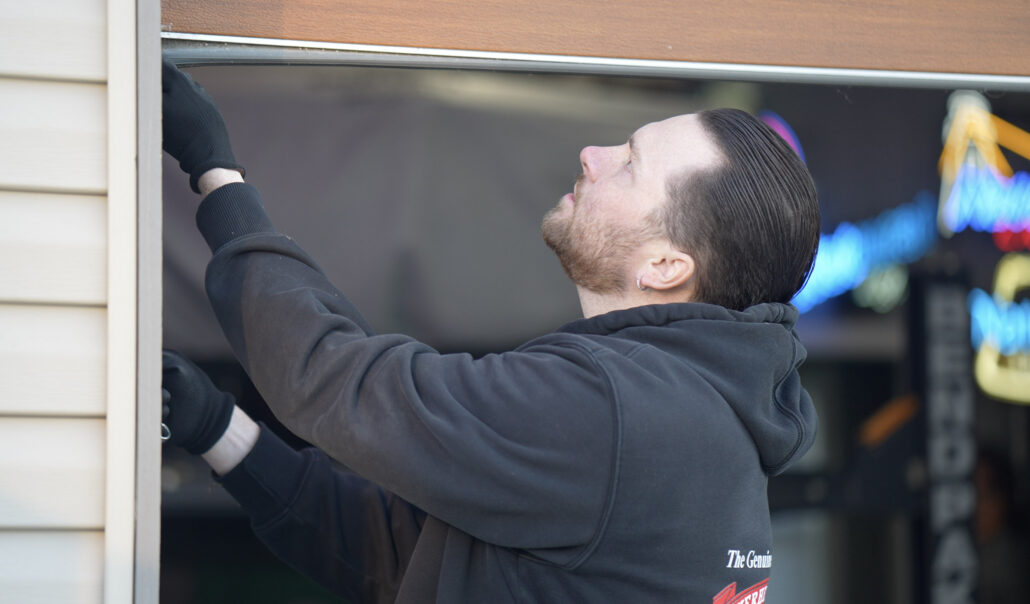
2. Your Garage Door Is Frozen to the Ground
Why it happens: Slush melts off your car, pools under the door, and refreezes overnight. The bottom seal freezes to the concrete, and the door is stuck until it thaws.
Try this first: Clear the ice from the threshold with a plastic scraper. Don’t keep pressing the button, and don’t yank the door. Forcing it can tear the seal, strain the opener, and bend the bottom panel.
Call Overhead if the seal is torn, cracked, or flattened. A worn bottom seal lets water get under the door, and replacing it is usually a quick fix.
3. You Heard a Loud Bang and the Door Won’t Open
Why it happens: That bang is almost always a broken torsion spring. Traditional torsion springs are rated for about 10,000 cycles, which is roughly nine years at three openings a day. Cold doesn’t create the problem but it does add an extra load that can cause a worn spring to break.
DON’T TRY ANYTHING! Stop using the door. Don’t run the opener or pull the release cord. A door with a broken spring is very heavy and can come down fast, causing injury.
Call Overhead immediately! Springs are under extreme tension and should only be replaced by a professional. Our team is available 24/7/365 for garage door emergency repairs in Toledo. Ask us about longer-life spring options while we’re there.
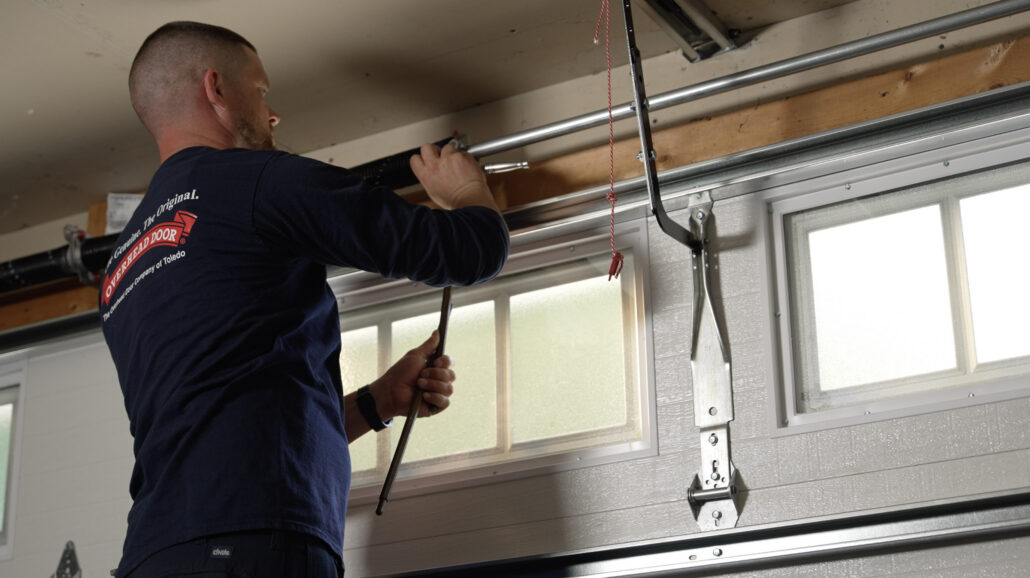
4. Your Door Won’t Open When It’s Cold
Why it happens: Cold weather contracts metal and thickens lubricant on the rollers, hinges, and bearings, making the opener strain and the garage doors harder to move. If you hear the opener humming but the door doesn’t budge, it could be a broken garage door spring (see #3).
Try this first: Listen. A slow operating door and groaning noise usually indicates there is friction in the gears, rollers, or bearings. A hum with no movement usually means a spring issue. Garage door won’t close and the opener light is blinking? Check the sensors first. Your opener’s manual explains the blink pattern.
Call Overhead if the door is noisy, jerky, or slow all winter. Our team will complete a seasonal tune-up that includes lubrication of hinges and rollers, inspection of cables and fasteners, and replacement of worn weather stripping and seals.
5. Your Keypad or Remote Stopped Working
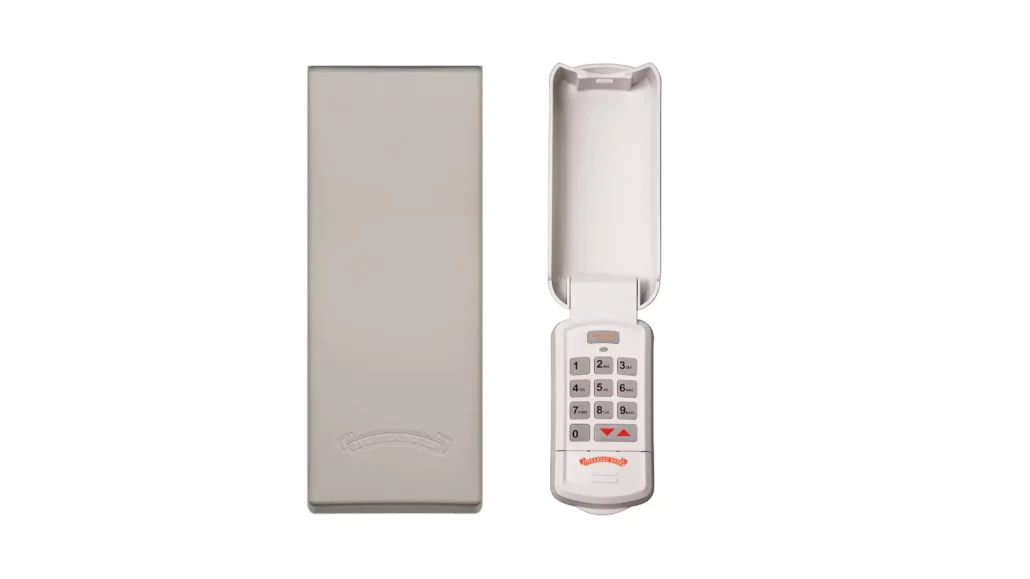
Why it happens: Cold weather drains batteries quickly, and the remote and keypad are often the first things to quit on a frigid morning.
Try this first: Replace the batteries in the remote and the keypad.
Call Overhead if new batteries don’t help. The remote may need reprogramming, or a misaligned safety sensor or a larger electrical issue may be the real culprit.
6. Road Salt Is Eating Your Door
Why it happens: If you commute on I-75, I-475, or the Ohio Turnpike — or any Northwest Ohio or Southeast Michigan roads — your car brings salt spray home in the wheel wells. It drips onto your garage floor, splashes the bottom of the door, and settles on brackets, cables, and springs. When you add Toledo’s freeze-thaw cycles, corrosion speeds up on springs and cables, causing further issues.
Try this first: On a warmer day when ice and snow have thawed, rinse the bottom panel and track of your garage door and wipe them dry. Look for visible rust on springs and cables.
Call Overhead when you see rust on springs or cables. Book a safety inspection before the next freeze. Rust spreads faster with every freeze and thaw, impacting door performance and safety.
7. Wind-Driven Snow Jams Your Door
Why it happens: Winter wind off Lake Erie and the wide-open country areas like Napoleon, Bowling Green, and Swanton wreak havoc on garage doors. Snow packed against sensors or the bottom of the door can block the beam or keep the door from sealing properly.
Try this first: Clear snow from the sensors and the door’s path before you close it.
Call Overhead if snow and ice keep building up in the same spot. We can check the weather seal and sensor placement.
Get Your Door Winter-Ready
There is never a convenient time to deal with a broken spring or frozen garage door. Book a seasonal safety inspection now and our factory-trained technicians will check what fails first when the temperature drops:
- Lubrication of hinges and rollers
- Inspection of springs, fasteners, and cables
- Inspection of safety sensor photo eyes
- Inspection of weather stripping and seals
- Tightening of any loose bolts
- Assess any worn and replacement parts
Book your seasonal safety inspection before the first freeze, or call the location nearest you:
Toledo: 419-476-0300
Sandusky: 419-624-0200
Findlay: 567-271-0122
Garage Door Cold Weather FAQs
Why won't my garage door close in cold weather?
Frosty or misaligned safety sensors are the most common cause, but a rigid, cold door can also trigger the opener’s safety reversal.
During the winter months, why does my garage door reverse when it's closing?
The sensors are detecting an obstruction, real or not. Frost, condensation, or snow on the lenses can break the beam even when nothing is blocking it.
How do I unfreeze a garage door that's stuck to the ground?
Scrape the ice from the threshold with a plastic scraper. Don’t force the door or keep pressing the opener, since that can tear the seal or strain the opener.
Why won't my garage door open when it's cold?
Cold thickens lubricant and contracts metal, adding friction. If you hear the opener straining with no movement, a broken spring is the likely cause.
Why did my garage door keypad or remote stop working in cold weather?
Why does my opener's light blink when I try to close the door?
Toledo Showroom
340 New Towne Square Drive
Toledo, OH 43612
Monday – Friday: 9am – 5pm
Saturday: 9am – 1pm
Sandusky Showroom
1223 W. Perkins Ave,
Sandusky, OH 44870
Monday – Friday: 8am – 5pm
Saturday: 9am – 12pm (by appointment only)
